The CSU will commit at least $842,836 in salary and allowances during the coming year as its new president takes office and its former president begins a broadly defined systemwide assignment.
The California State University Board of Trustees appointed S. Terri Gomez as the next president of Cal State San Bernardino on July 22. This is the university’s first change in presidential leadership in 14 years.
Gomez, currently provost and vice president for Academic Affairs at Cal Poly Pomona, will transition into the role of President on Aug. 3. On the same day, outgoing President Tomás D. Morales will begin a one-year executive transition assignment with an annual salary of $343,920.
Gomez will receive an annual salary of $426,916, a $60,000 housing allowance and a $12,000 automobile allowance. Combined with Morales’ transition salary, the CSU will commit at least $842,836 in direct salary and allowances during the first year of Gomez’s presidency. That amount does not include executive benefits, Gomez’s relocation reimbursement, Morales’ benefits or any business and travel expenses associated with his assignment.
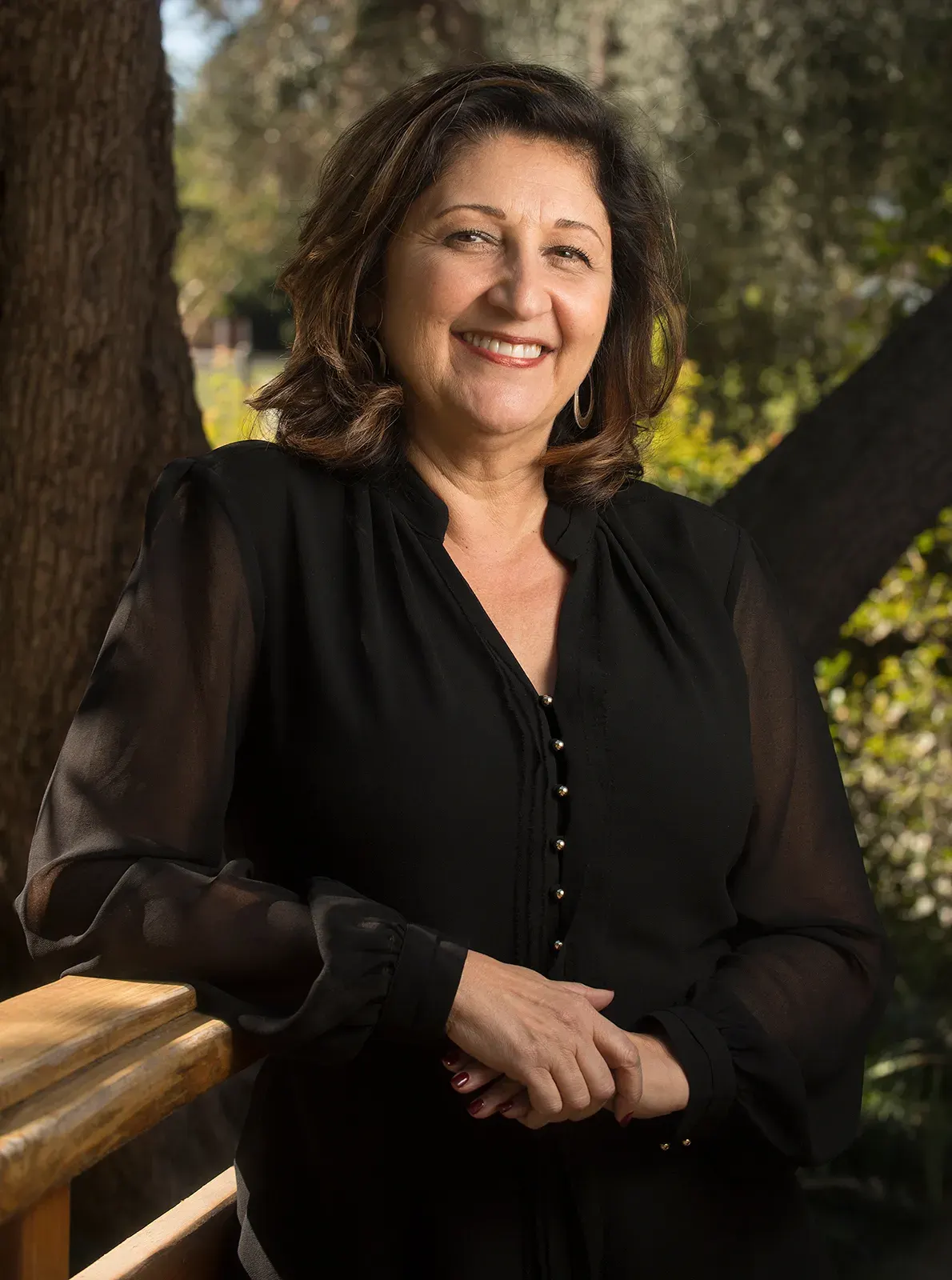
“As a first-generation college graduate and a lifelong resident of the Inland Empire, I am honored to be named Cal State San Bernardino’s president,” Gomez said in the CSU’s appointment announcement.
 Cal Poly Pomona
“CSUSB is a university of access, talent and possibility, and its success matters profoundly to the Inland Empire, the High Desert and the Coachella Valley,” she added.
Gomez brings 27 years of higher education experience to CSUSB, all within the CSU system. A lifelong Inland Empire resident, she began her college education at San Bernardino Valley College before transferring to UCLA, where she earned bachelor’s, master’s and doctoral degrees in political science.
Starting at Cal Poly Pomona in 1999, Gomez was a faculty member in the Department of Ethnic and Women’s Studies, eventually becoming a full professor and department chair. She has also held several administrative roles, such as interim associate dean, associate vice president for Student Success and associate provost for Student Success, Equity and Innovation.
She has been Cal Poly Pomona’s provost and vice president for Academic Affairs since 2023.
The CSU credited Gomez with expanding proactive advising and student-success teams while improving four-year and six-year graduation rates. Her work has also included transfer pathways, artificial intelligence in teaching and learning, career-connected education, enrollment strategy and regional partnerships among K-12 schools, community colleges and universities.
Her background appears to align with several priorities expressed by students, faculty and staff during a March 23 presidential search open forum. Participants repeatedly asked the search committee to select someone who understood first-generation and underserved students, had meaningful connections to the Inland Empire, valued shared governance and came from outside CSUSB’s existing senior administration.
The forum also included concerns about campus budgeting, course availability, faculty workload, staff support, student fees and the need for greater financial transparency. Gomez’s biography corresponds with many of the personal and professional qualities requested during the forum, but how her administration will respond to those financial and operational concerns remains to be seen.
The Board of Trustees approved Gomez’s compensation unanimously. In addition to her salary and allowances, she will receive standard CSU executive benefits and reimbursement for reasonable moving and relocation costs.
Morales, who became CSUSB’s fourth president in August 2012, was granted the honorary title of president emeritus by the board. The emeritus designation itself carries no compensation. His continued salary comes from a separate executive transition assignment running from Aug. 3, 2026, through Aug. 2, 2027.
The assignment is not a severance payment. Morales will remain a CSU employee under the system’s Transition II Program, which allows certain departing executives to move into another CSU assignment after leaving their leadership positions.
Chancellor Mildred García told trustees that Morales will work to advance the CSU’s international engagement, strengthen global partnerships and advise the chancellor and trustees on international initiatives. His assignment will include work with the International Association of University Presidents and CSU International Programs. He will also remain available to provide Gomez with institutional history, consultation and strategic guidance.
The description establishes general areas of responsibility but does not identify specific partnerships Morales is expected to develop, reports he must produce, deadlines he must meet or performance measures that will be used to determine whether the assignment was successful. It also does not establish how much of his work will directly benefit CSUSB rather than the broader CSU system.
Under the Transition II Program rules, Morales must provide the chancellor with monthly reports describing activities and milestones completed during the assignment. The chancellor must also provide trustees with an annual public report on transition activities.
The policy requires transition agreements to identify the executive’s specific duties, assigned work locations, compensation and support. It also requires participating executives to have identified a CSU position they will return to after completing the transition year. The CSU has not publicly identified that position for Morales or released his complete written agreement.
The Chancellor’s Office ordinarily pays a participating executive’s salary and benefits unless an alternative funding arrangement is established. This means Morales’ salary should not automatically be characterized as coming directly from CSUSB’s campus budget. However, CSU Public Affairs did not confirm whether the standard funding arrangement applies in his case.
Coyote Chronicle contacted the CSU Chancellor’s Office seeking information about the funding source, expected travel expenses, specific deliverables, performance measures, direct benefit to CSUSB and Morales’ position following the transition year.
CSU spokesperson Warren Robak directed the Chronicle to the board’s written materials and archived meeting video but did not answer those questions. A follow-up asking whether the office preferred not to comment had not received a response as of July 28.
The compensation decisions come as CSUSB continues to manage significant campus budget pressures. Minutes from the university’s June 10 Budget Advisory Committee meeting show that divisions were asked to maintain a 6% budget reduction to help address a projected $3.6 million shortfall during the 2026-27 fiscal year. Academic Affairs is also projected to end the current fiscal year with an accumulated shortfall of approximately $20 million.
Students will also begin paying a higher Instructionally Related Activities fee this fall. The fee will increase from approximately $199 to $500 per academic year, adding $301 to the mandatory cost paid by students once the increase is fully implemented.
Those campus financial pressures are separate from the Chancellor’s Office funding normally used for executive transition assignments. Still, Morales’ salary remains a CSU expenditure at a time when students, faculty and staff across the system are being asked to absorb higher costs and reduced budgets.
Morales is eligible for the transition assignment because he was appointed before March 22, 2022, and served more than five years as a CSU executive. The Board of Trustees closed the Transition II Program to executives appointed on or after that date, but executives such as Morales retained their eligibility. Gomez will not be eligible for the same program when she eventually leaves the presidency.
Gomez’s appointment resolves who will lead CSUSB into its next chapter. What remains unresolved is what the CSU and CSUSB will materially receive from Morales during the year after his presidency and how the system will measure whether that work justifies its $343,920 cost.
The monthly reports required by CSU policy may eventually provide those answers. For now, the public has been given a salary and a broad description of responsibilities, but not the detailed work plan needed to evaluate the return on that investment.