SAN BERNARDINO, Calif. — As California State University, San Bernardino (CSUSB) students are being asked to complete a short online survey about how they want their student fees spent, a closer examination of the university’s budget structure suggests that much of that money may already be committed before students ever respond.
At the center of the issue is the Instructionally Related Activities (IRA) fee, currently set at $199 per academic year. University materials tied to the ongoing consultation process indicate that CSUSB is considering raising that fee to $500, an increase of $301 per student. Yet the survey now circulating through Canvas and campus announcements does not directly ask students whether they support that increase, nor does it clearly present the full proposed amount within the questionnaire itself.
Instead, students are invited to complete what the university describes as a “1–2 minute” survey about how IRA funds should be used, with the added incentive of a $10 campus voucher. The questions focus on which programs students have used, how funding should be prioritized, and whether fees appear fair compared to other CSU campuses. What the survey does not explicitly ask is whether students are willing to pay hundreds of dollars more each year. That omission is significant because the visible portion of IRA spending tells only part of the story.
Public allocation documents for the 2025–2026 academic year show approximately $623,000 distributed across academic programs and student-facing initiatives. These include $80,100 for Education Abroad, $70,000 for Model United Nations, $57,400 for The Coyote Chronicle, and more than $80,000 each for Theatre Arts and Music when general fund support is included. On paper, the distribution suggests broad support for academic enrichment, student media, and co-curricular programming. But those figures represent only a fraction of the total IRA budget.
Based on current fee levels and enrollment estimates, the IRA fee generates between $3.2 million and $3.5 million annually (If the IRA fee increases to $500, total annual revenue would rise to an estimated $8 million to $8.8 million. Based on current allocation patterns, roughly $5.4 million to $6.2 million could be directed toward intercollegiate athletics). According to multiple sources familiar with the allocation process, approximately 68% to 70% of that total, roughly $2.2 million to $2.4 million, is directed toward intercollegiate athletics as a base allocation before the remaining funds are distributed through the competitive process reflected in public program tables.
That distinction is central to understanding the controversy. The budget students see (roughly $600,000) represents the portion available for redistribution. But the majority of the funds, critics say, are effectively committed before students are asked how the rest should be spent.
“It’s presented as a conversation about improving services,” said one source familiar with the consultation process. “But the central question of whether students are willing to pay more, is not directly asked.”
The survey is part of what the university describes as an “alternative consultation process,” a method permitted under California State University policy when administrators determine that a student referendum is not the most effective way to gather input. While referendums (direct student votes) are considered the preferred approach, CSUSB officials have cited historically low participation rates as justification for using this alternative method. Instead of a vote, the process has relied primarily on classroom presentations, informational materials, and a single online survey.
However, a quick, informal survey conducted by student reporters suggests that many students were largely unaware that a fee increase was under consideration at all. Several respondents said they only became aware of the proposed change after it was explained to them during reporting interviews. For many, the Canvas-posted survey appeared to be the only visible form of engagement. That limited awareness has intensified concerns about the survey itself, which critics describe as insufficient for capturing informed student opinion. Sources familiar with the process have also raised concerns about its accessibility and overall reliability as a measure of student sentiment.
At the same time, individuals familiar with discussions at the Campus Fee Advisory Committee (CFAC) say the proposal faced resistance during internal deliberations. According to multiple sources, representative student members voted against the measure during committee discussions. Those sources expressed surprise that the university administration chose to move forward with the proposal despite that opposition. Committee members also raised concerns about both the size of the proposed increase and the absence of a direct student vote. Additional concerns centered on whether the consultation materials provided students with a clear and balanced understanding of the proposal. Those concerns, sources say, were ultimately not reflected in the final consultation materials presented to students.
Further, questions have also emerged about the survey’s design. While respondents are asked to enter a Coyote ID number for a chance to receive a voucher, the survey appears to be accessible to individuals with university login credentials beyond just enrolled students, including faculty, staff, and others affiliated with the institution. Sources familiar with the system also raised concerns about whether safeguards exist to prevent multiple submissions. The reporters have not independently verified the survey’s full technical structure, but the concerns themselves have contributed to skepticism about how representative the results will be.
Because of the time-sensitive nature of the survey, which is scheduled to close Thursday, April 30, 2026, student journalists working on this investigation sought to verify these concerns. The reporting team is working to gather documentation and corroborate claims, within a process that may conclude before many students fully understand its implications. For student leaders, the issue extends beyond formal processes and impacts their everyday experiences.
Kristin King, a senior and Vice President of the Public Relations Student Society of America (PRSSA) at CSUSB, said student organizations often struggle to access sufficient funding despite the existence of IRA resources.
“Other organizations are not supported at all,” King said. “There have been times when I’ve had to use my own money just to sustain some of our basic needs.”
She emphasized that organizations like PRSSA rely on funding to create professional opportunities for students.
“We’re trying to build a reputable team by bringing in guest speakers and creating opportunities for students to connect with professionals. But that takes resources,” she said. “Without that support, those opportunities just don’t happen.”
Student media has experienced similar challenges. Dr. Gregory Gondwe, former faculty supervisor of The Coyote Chronicle, said the newspaper has seen its funding decline over time despite serving the entire campus community.
“The Coyote Chronicle serves the entire university and provides students with hands-on journalism experience, yet its funding has continuously decreased,” Gondwe said. “At one point, the paper received more than double what it does today.”
He noted that reductions in funding directly affect students’ ability to gain practical experience.
“This is experiential learning in its purest form,” Gondwe said. “When funding is reduced, those learning opportunities are reduced as well.”
For some faculty members, the concern is not whether the IRA fee should increase, but how the process is being conducted. One faculty source, who requested anonymity due to concerns about professional repercussions, said they support an increase in principle but criticized the current approach.
“There is a legitimate case to be made for increasing the IRA fee,” the source said. “But it should be done transparently, through a vote, and with clear information about where the money is going.”
While the university has framed the fee increase as necessary, some students question whether alternative funding avenues were fully considered. The institution regularly engages in philanthropic efforts and hosts large-scale events, reflecting its ability to generate and allocate resources in different ways. These activities raise a broader question about how institutional priorities are balanced when new student costs are introduced.
It also does not reflect the broader scope of administrative spending, including formal events and institutional galas. While these initiatives serve important purposes, their visibility raises a broader question about how institutional priorities are balanced when additional costs are placed on students.
The financial implications for students are substantial. If approved, the increase would add $301 annually to student costs, placing CSUSB among the higher IRA fee levels in the CSU system. For a student population that includes many first-generation and low-income students, the increase is not insignificant.
“I already work two jobs to stay in school,” said one student who asked to remain anonymous. “Another $300 could mean taking fewer classes or picking up more hours. It’s not a small decision.”
Requests for comment from university administrators were referred to publicly available materials, including the “Your Fees, Your Campus” website. Officials did not directly address questions about the survey’s structure, the decision to forgo a referendum, or concerns raised during the consultation process. As the survey period draws to a close, the broader question remains unresolved, “Students are being asked how they would like their fees to be used, but how much of that decision is still open to them?”.
NOTE: This article was produced by student reporters from the Department of Communication and Media at CSUSB, who are part of The Coyote Chronicle, advised by Dr. Greg Gondwe.
WHAT STUDENTS SHOULD KNOW BEFORE THURSDAY
1. The survey does NOT ask you to approve the fee increase
You are being asked how to spend funds, not whether to increase them.
2. The proposed fee jump is substantial
$199 → $500 per year (+$301)
3. Most IRA funds may already be allocated
A large portion goes to athletics before program funding is distributed.
4. The process replaces a direct vote
A referendum was not used; this is an “alternative consultation.”
5. The survey closes Thursday
After that, there may be no further formal input before a decision.
6. The final decision is not yours
Under CSU policy, the campus president has final authority.
Contributing Writers: Pricila Gordillo, Anna Silva & Samuel Rodriguez
CSUSB’s IRA Fee Structure Channels Millions to Athletics While Students Are Asked to Weigh In
- In CSUSB NEWS
- Apr 30, 2026
- 1734 Views
- 0 Comments
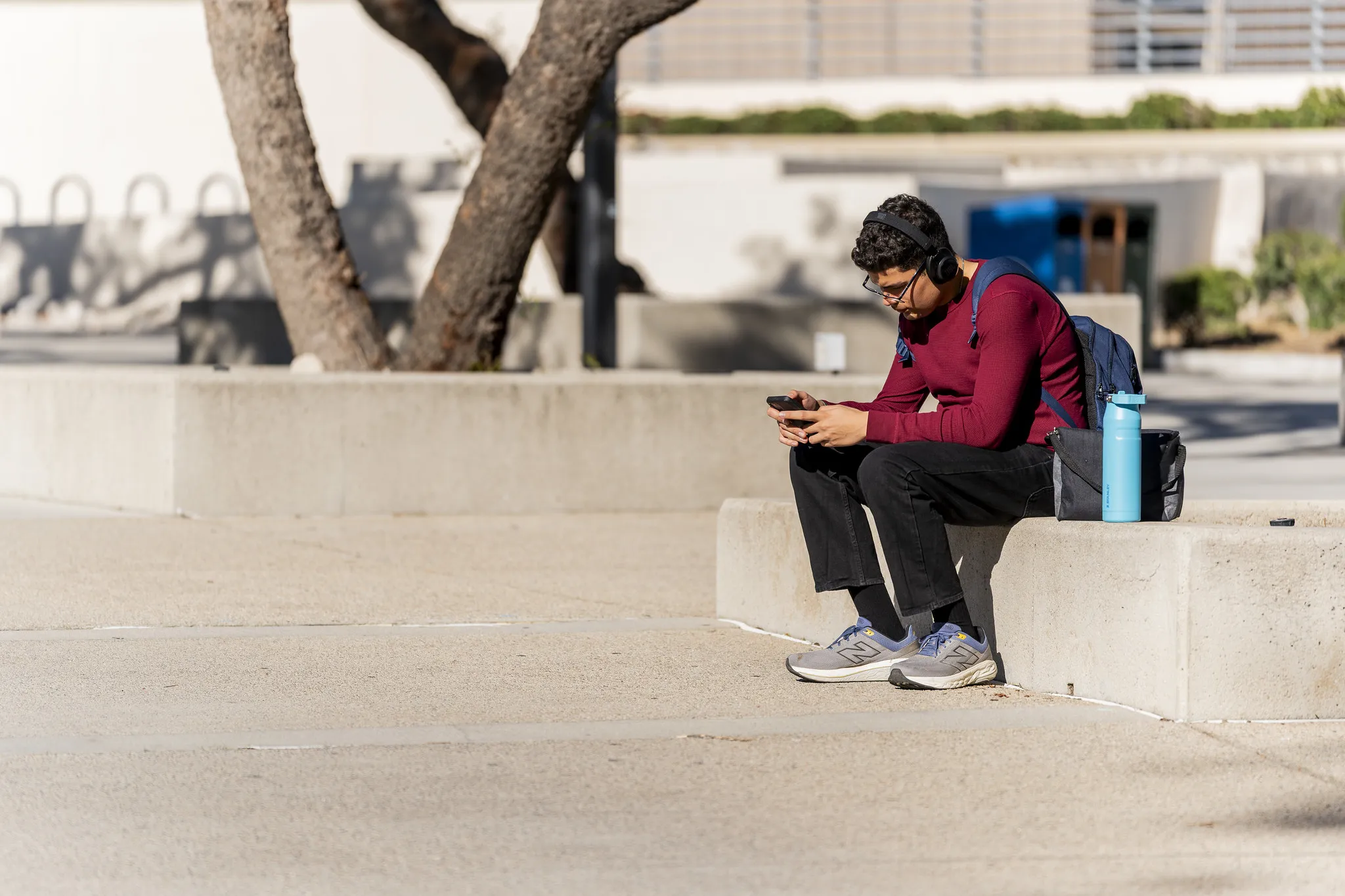
A CSUSB students takes a moment on campus to scroll through their phone
 Stephen Day
Stephen Day

Other Recent Articles in CSUSB News
-
Editorial: Our Commitment to Ethical, Independent Journalism.
- CSUSB NEWS
- Oct 08, 2026
-
Student found dead at Arrowhead Village
- CSUSB NEWS
- Oct 03, 2026
-

Culture, community and continuity at the San Manuel Pow Wow
- CSUSB NEWS
- Sep 24, 2026
-

Authors of The AI con challenge inevitability narrative in CSUSB-hosted conversation
- CSUSB NEWS
- Sep 21, 2026
-
CSUSB Honors College Hosts First Open House
- CSUSB NEWS
- Sep 10, 2026
Leave a Comment
Your email address will not be published. Required fields are marked with *
Recent CSUSB News
-
-
Student found dead at Arrowhead Village
- CSUSB NEWS
- Oct 03, 2026
-
-
-
CSUSB Honors College Hosts First Open House
- CSUSB NEWS
- Sep 10, 2026
Recent Entertainment
-
-

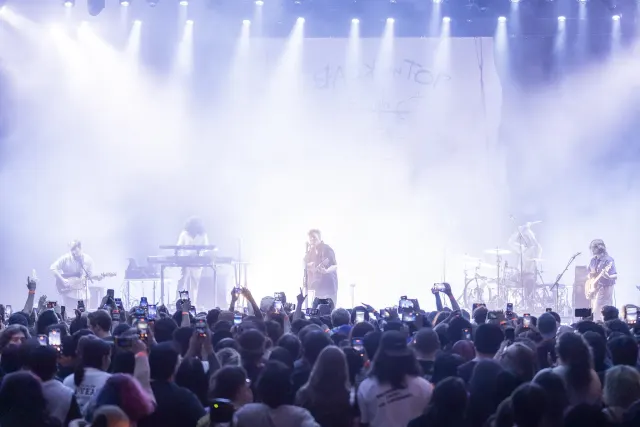
The Power of Daisy Chain Fields
- ENTERTAINMENT
- Sep 09, 2026
-

Recent Food & Drink
-
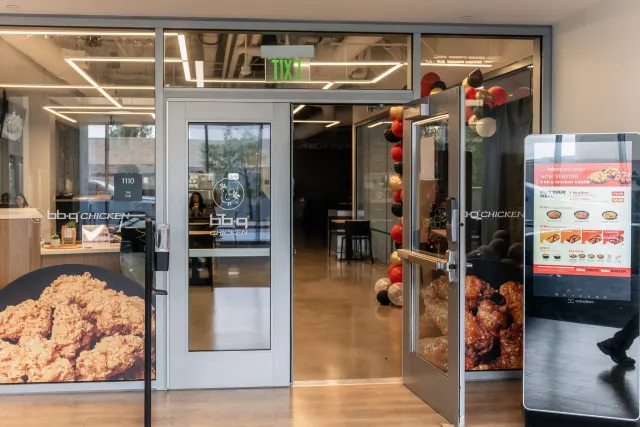
The New Spice at SMSU North
- FOOD & DRINK
- Oct 13, 2026
-

-

-
Recent Lifestyle

Recent News


Recent Opinions
Recent Politics
-
Barbequeing While Black: Labor day incident
- POLITICS
- Sep 30, 2026
-